24/7 Security Support
Maryland
Washington, DC
Virginia
Multi-State Operations
24/7 Security Support
Maryland
Washington, DC
Virginia
Multi-State Operations
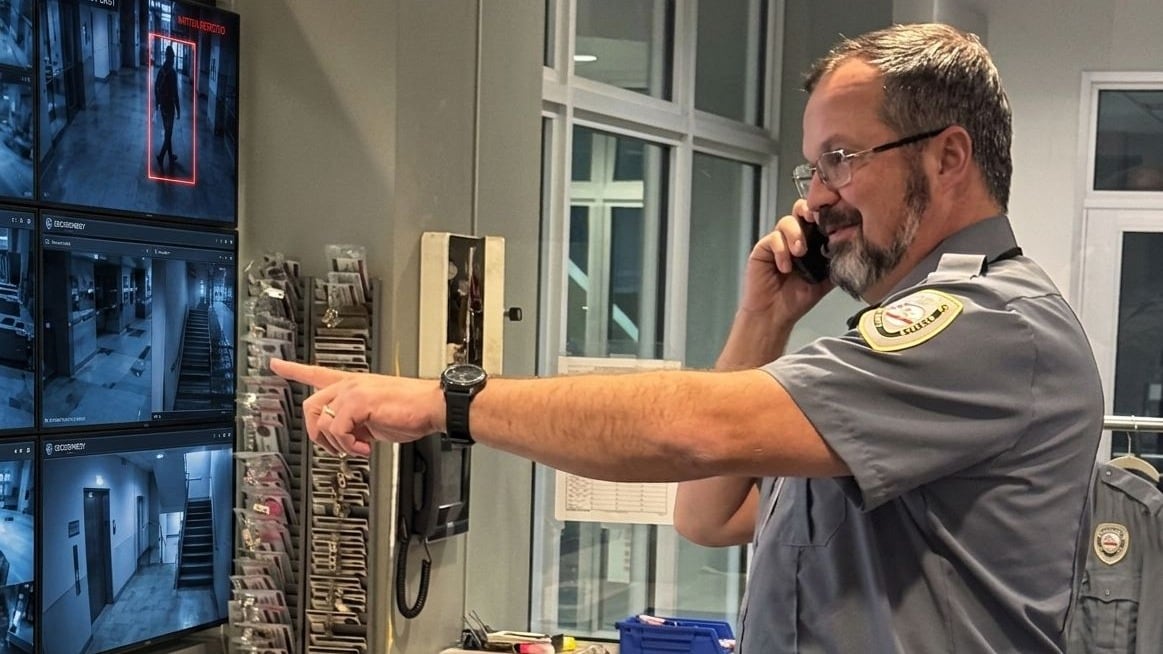
Security Guides
Guides and checklists to help you strengthen security, reduce risk and create safer environments for your people, property and operations.
Expert Guidance
Drawn from our published articles
Practical Checklists
Questions and steps you can use today
Linked to Services
See how each guide applies on site
Featured Security Guides
Each guide distills practical advice from Securemedy’s published articles into a checklist you can use when planning or reviewing security.
Security Planning
A checklist for deciding which level of coverage fits your site.
✓ Review the site’s actual incident history, not a general sense of unease.
✓ Check insurance and contract requirements for a minimum coverage level.
✓ Confirm local licensing law, which varies by state.
✓ Consider the nature of foot traffic and who uses the site.
✓ Account for client and stakeholder expectations at public-facing sites.
Security Planning
The tradeoffs to settle before you choose a security posture.
✓ Armed or unarmed, based on the site, risk profile and regulations.
✓ In-house or contracted security, based on resources and risk tolerance.
✓ Cameras and technology alongside officers, not instead of them.
✓ Static posts, mobile patrol or a blend matched to layout and budget.
Choosing a Provider
What to ask beyond the uniform and the sales pitch.
✓ How do you train officers, and how is that training kept current?
✓ How are shifts supervised, and how is reporting reviewed?
✓ How is backup coverage handled when an officer is unavailable?
✓ How long have you been operating, and are you licensed where I need coverage?
✓ What happens on the night something actually goes wrong?
Choosing a Provider
The context a security plan should be built on.
✓ Map who moves through the space and when, including vendors and visitors.
✓ Study where incidents happened and what preceded them.
✓ Align leadership on current security gaps.
✓ Estimate what a failure would cost beyond the immediate incident.
Public Safety
How to reduce risk where access cannot be controlled.
✓ Encourage staff and visitors to report unusual items or behavior early.
✓ Use visible patrols and monitoring where fixed checkpoints are not practical.
✓ Keep incident reporting channels simple and well known.
✓ Plan how your team will coordinate with local and federal responders.
Technology
Using cameras, access control and alarms to extend what officers can do.
✓ Use cameras to extend visibility across areas an officer cannot watch.
✓ Rely on trained officers for judgment, de-escalation and directing people to safety.
✓ Connect alarms and access control to a clear response procedure.
✓ Review footage and reports together as part of supervision.
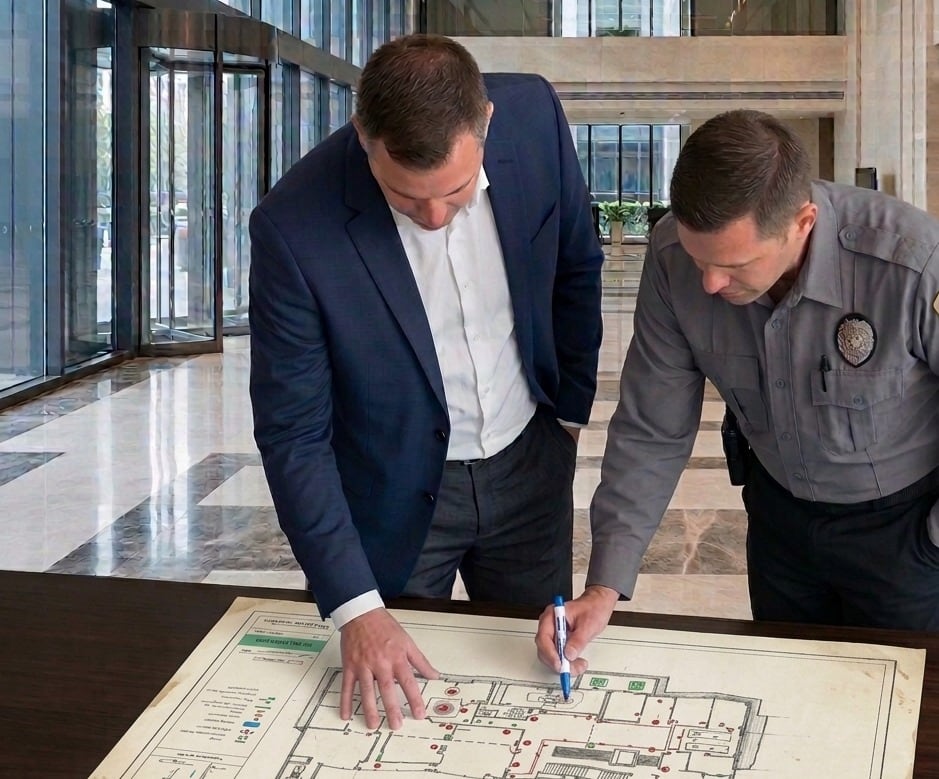
Printable Versions
Printable versions will be added as approved documents become available. Need one now? Our team can help.

Still have questions?
Our team is ready to provide the information you need and help design a security solution for your organization.
Tell us about your facility and security needs. We'll follow up by email within 1–2 business days.
Step 1 of 2: Contact
Step 2 of 2: Requirements
Prefer to talk? Call (240) 419-3125.