If you are a facility or operations leader evaluating a new security provider today, ask yourself a hard question: Are you getting a security “placement” or a tailored security “program”?
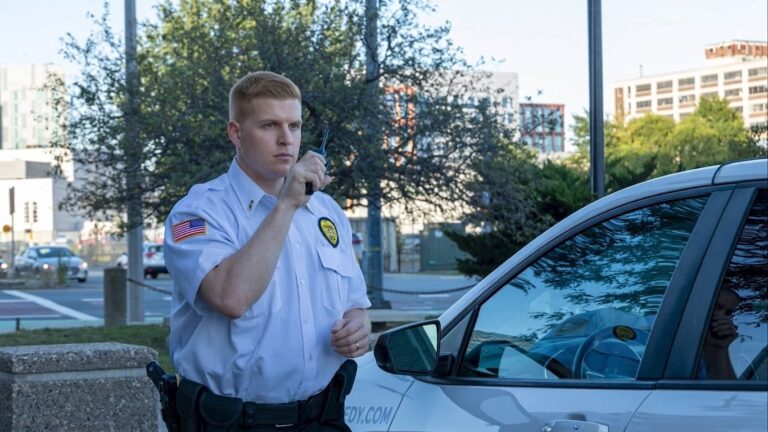
In the corporate security industry, there is a dangerous trend of prioritizing presence over strategy. Many vendors focus entirely on “placement” putting a guard at a desk, a camera in a corner, or an access reader on a door without ever understanding the unique ecosystem of the building.
At Securemedy, we believe that security without context is just placement. And we’re not in the placement business. We build comprehensive security programs around environments. Here is why that distinction changes everything about your operational outcome pand the bottom line.
The Dangerous Trap of “Security Placement”
A placement-first approach assumes that physical security is a one-size-fits-all commodity. It treats your facility like a static box rather than a dynamic environment.
The problem? Threats are not static. According to recent industry data, 60% of companies have encountered breaches in their physical security measures over the past five years [1]. Furthermore, standard security deployments often fail because they are entirely reactive. They look good on paper but crumble under the actual, day-to-day realities of how people, assets, and information flow through your specific space.
True security planning requires environmental intelligence. It requires a vendor who acts as a partner in risk management rather than a staffing agency.
4 Critical Questions Most Security Vendors Skip
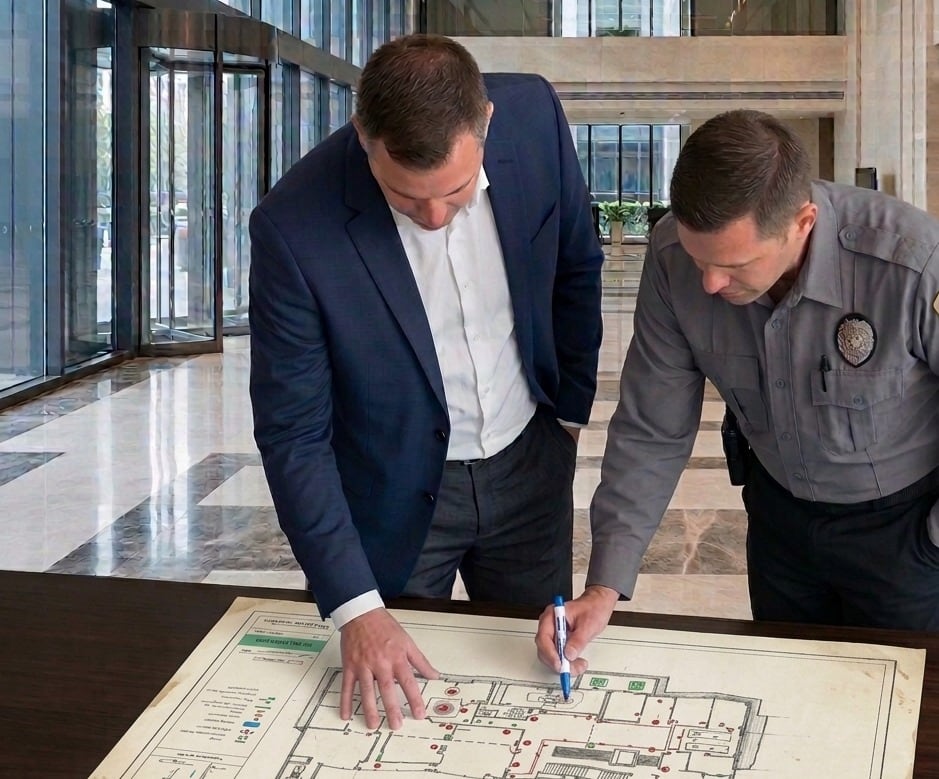
Before Securemedy ever proposes a security plan to a new client, we sit down and ask the critical questions that most vendors skip. To build a true B2B security program, we must establish context:
1. Who moves through this space and when?
A corporate headquarters in Washington D.C. operates very differently at 2:00 PM on a Tuesday than it does at 9:00 PM on a Friday. We don’t just look at access points; we analyze behavioral flows, vendor schedules, employee habits, and visitor traffic to identify vulnerabilities during transition periods.
2. Where have incidents happened, and what preceded them?
History leaves clues. Rather than just logging past incidents, a proper security consulting approach dissects them. What were the environmental, operational, or technical failures that precipitated the event? Understanding the root cause ensures we don’t just put a band-aid on a gaping vulnerability.
3. What does the leadership team actually understand about their current security gaps?
There is often a massive disconnect between the C-suite and the reality on the ground. Research shows that 90% of Chief Security Officers (CSOs) feel company leaders are vastly more concerned about cyber security than physical security, leaving facilities exposed [2]. We help bridge that gap, ensuring security leadership and corporate stakeholders are aligned on actual risk exposure.
4. What would a failure here cost beyond the immediate incident?
The cost of a physical security breach goes far beyond a broken window or stolen laptop. The estimated average direct cost to rectify a physical security breach is around $100,000, with enterprise-level incidents averaging over $500,000 [1][3]. But the indirect costs operational downtime, reputational damage, and loss of client trust are far higher. In fact, 25% of public companies reported a drop in corporate value following a significant physical security incident [2].
We Build Programs Around Environments
When a security strategy is built on the answers to these four questions, it ceases to be a mere placement. It transforms into a cohesive program.
A Securemedy security program integrates human intelligence, technological assets, and operational procedures tailored precisely to your facility. We align our strategies with your broader facility management goals to ensure that our presence enhances your operations rather than hindering them.
This contextual approach allows us to proactively deter threats, seamlessly manage access, and respond to emergencies with precision.
The Conversation Starts Here
We want to hear from facility managers, operations directors, and corporate leaders who are tired of settling for placements.
If you were evaluating a new security provider today, what’s the ONE question they should ask you but usually don’t?
Don’t wait for a costly breach to realize your current vendor doesn’t understand your environment. Contact Securemedy today, and let’s start building a security program that actually works for your facility.
Ready to stop settling for placements? Contact Securemedy today to schedule a comprehensive security risk assessment.